What a Whole House Renovation Actually Costs in New Jersey
2026 Numbers and Straight Talk For Homeowners Who Want The Facts Without the Fluff
Get Answers Fast - Jump Right In To Each Section
If you have been Googling “how much does it cost to renovate a house” and landing on articles written for someone in Ohio or Texas, I get why you are frustrated. New Jersey is its own animal. We have older housing stock, higher labor rates, a permit system that runs through your specific township rather than one statewide office, and a construction season that has to work around actual winters. So let’s talk about what this really costs if you live here.
I have been a contractor in Central Jersey for decades now, and the question I get asked more than any other, usually before someone signs a contract with anyone, is simply this: what am I actually going to spend? So let’s break it down room by room, trade by trade, and township requirement by township requirement, the way I would if you were sitting across from me at your kitchen table.
Why New Jersey Renovations Costs Are More Than the National Average
Every national cost calculator you find online is built off a blended average across all fifty states. New Jersey almost always lands above that blend, and there are real reasons for it, not just “everything costs more here” hand waving.
Our housing stock is old. A huge share of homes in towns like Westfield, Cranford, Summit, and Scotch Plains were built between 1920 and 1960. That means original plaster walls instead of drywall, knob and tube or early cloth wiring buried in places nobody expects, cast iron plumbing stacks that are decades past their intended life, and in many cases, lead paint under every layer that came after it. None of that shows up in a national average, but it shows up in your invoice.
Labor rates run higher here than in most of the country, largely because the cost of living for skilled tradespeople, licensed plumbers, electricians, and general contractors, tracks with the cost of living for everyone else in the state.
Permits are handled town by town, not by one statewide office. Westfield, Summit, New Providence, and every other municipality in New Jersey has its own construction office, its own fee schedule, and its own review timeline. That local variation adds both cost and time that a national guide simply cannot account for.
We work around real seasons. Foundation work, additions, roofing, and exterior projects generally need to happen between spring and fall, which means contractors book up fast in that window and prices can firm up during peak months.
The Real Cost Per Square Foot for a Whole House Renovation in NJ
As of 2026, a full home renovation in New Jersey typically runs between $150 and $400 per square foot, depending on scope, finish level, and how much of the home’s structure and systems you are touching.
For a 2,000 square foot home, that puts most projects somewhere between $300,000 and $600,000 for a true top to bottom renovation involving structural changes, new mechanicals, and higher end finishes.
That is a wide range, so let’s narrow it down by what kind of project you are actually doing.
A cosmetic refresh Renovation
This includes new flooring, paint, updated fixtures, and no structural work. This type of renovation tends to land on the lower end, often between $60 and $100 per square foot.
A mid range renovation
This renovation type includes some layout changes, updated kitchens and bathrooms, and modernized electrical; and it typically runs $150 to $250 per square foot.
A full gut renovation
This type of renovation goes down to the studs, with structural changes, all new systems, and higher end finishes. This is where you see $250 to $400+ per square foot, and in premium towns or with custom finishes, it can climb past that.
The single biggest driver of where you land in that range is not your square footage. It is how many of your home’s systems (electrical, plumbing, HVAC, structure) you are opening up versus leaving alone. Cosmetic work is cheap by comparison. Systems work is where the real money goes.
Room by Room: What Homeowners Are Actually Spending
Since most people do not renovate an entire house in one shot (and honestly, I usually recommend against it for budgeting and sanity reasons, more on that below), here is a room by room breakdown that reflects what NJ homeowners are paying in 2026.
Kitchen Renovations
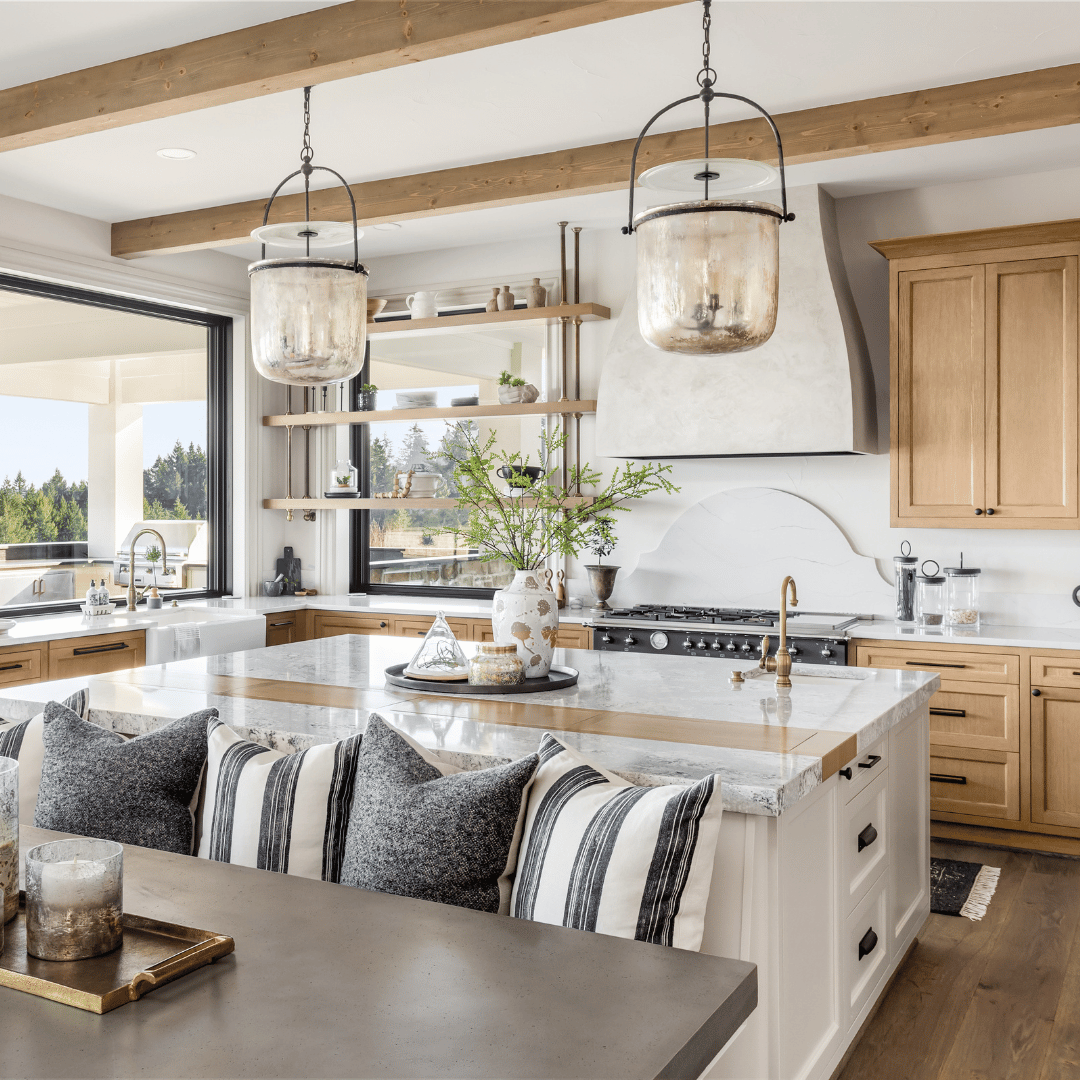
Kitchen renovations can range from around $25,000 for modest updates that include new countertops, fixtures and maybe cabinet refacing or other cosmetic cabinet updates to $70,000 or more for a complete gut renovation. Larger kitchen projects featuring luxury finishes, premium appliances, custom millwork, structural modifications, or an expanded footprint that requires new plumbing or electrical work can easily exceed $100,000.
Bathroom Renovations
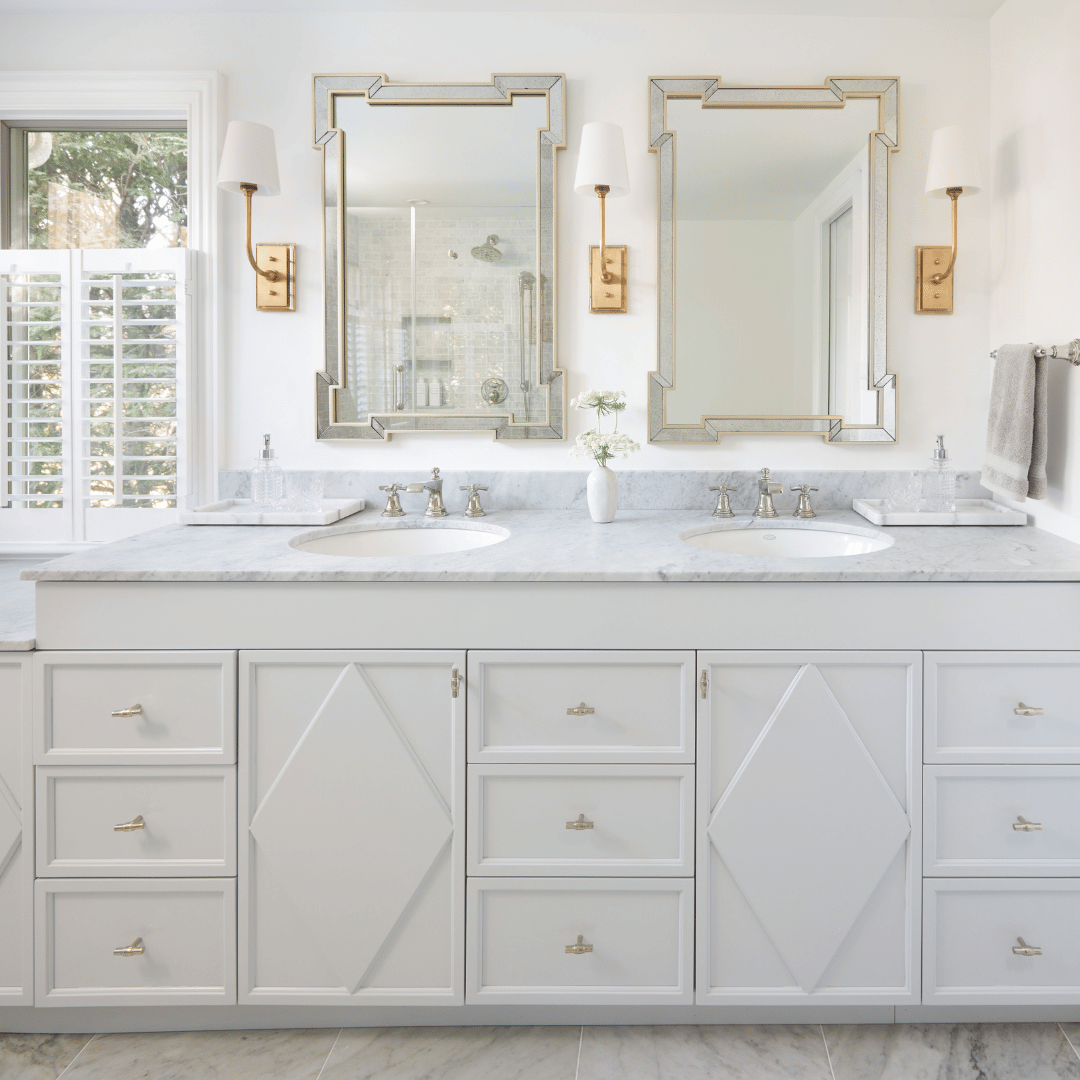
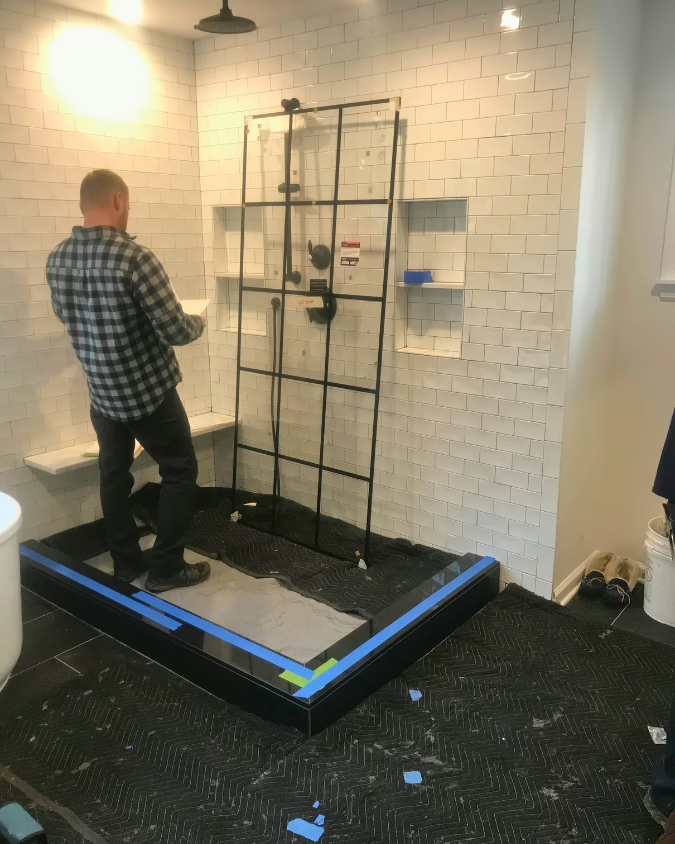
Bathroom renovations start at $15,000 for small updates to countertops, backsplash and fixtures and can easily get to $50,000 + if you add cabinet and flooring updates. A full gut master featuring custom tile, a frameless glass shower enclosure, higher end fixtures, and layout changes can easily exceed $100,000. One of the biggest cost drivers is adding a new bathroom as the plumbing often needs to be installed below the existing concrete slab.
Home Additions
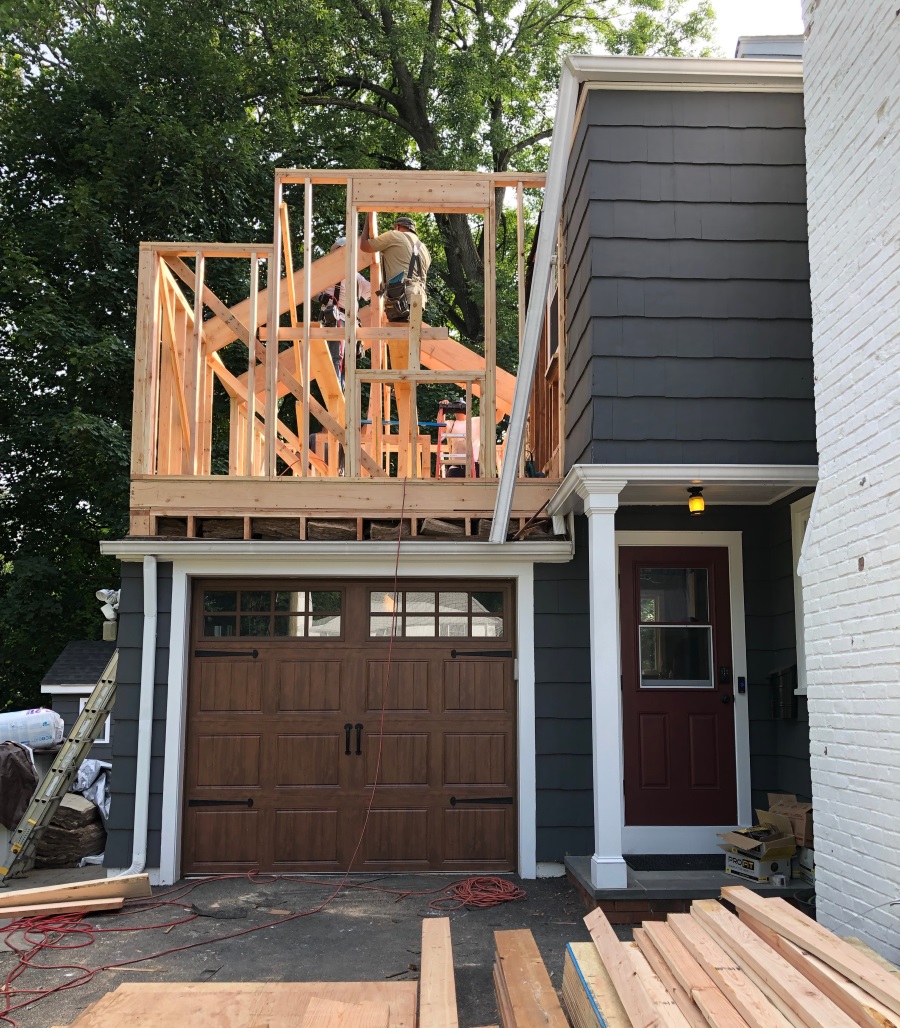
In New Jersey, professionally built home additions typically start around $150,000, while larger or more complex projects commonly range from $200,000 to $400,000 or more. Unlike a traditional renovation, a home addition requires constructing an entirely new portion of the home, including the foundation, framing, roofing, insulation, windows, siding, and new plumbing, electrical, and HVAC systems, all of which contribute to the higher overall cost.
Basement Renovations
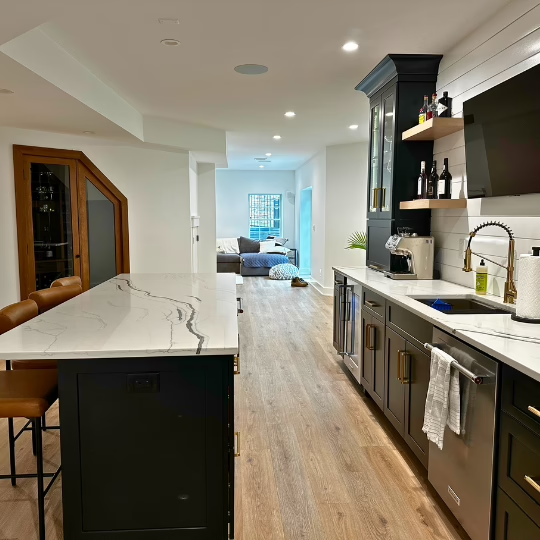
Basement renovations typically range from $35,000 to $85,000, depending on the size of the space, the level of finishes, and how you plan to use it. A standard basement finish with framing, drywall, flooring, lighting, and a finished ceiling generally falls on the lower end of that range, while custom features, built in storage, wet bars, home theaters, or bedrooms increase the overall investment.
How to Choose a Whole-House Renovation Contractor in NJ
Choosing the right contractor is one of the most important decisions you’ll make. To help homeowners avoid costly mistakes, we’ve created a free guide that walks you through the hiring process and explains what separates reputable contractors from those you should avoid.
What You'll Learn
- How to verify a New Jersey Home Improvement Contractor license
- What insurance every contractor should carry before work begins
- Which reviews and references actually matter
- Common red flags that could signal problems later
- The essential questions every homeowner should ask before hiring a renovation contractor
- How to compare proposals and avoid costly surprises during construction
The Trades You Cannot Skip (and What They Actually Cost)
Any renovation that touches your home’s structure or systems is going to bring in licensed trades beyond your general contractor’s crew, and this is where a lot of first time renovators get caught off guard on budget.
Structural engineer Cost
If you are removing a load bearing wall, adding a second story, or changing your home’s footprint, you need a licensed structural engineer to sign off before your township will even issue a permit. Expect this to run several hundred dollars for a straightforward review, more if your project involves complex framing or an older home with unknown existing conditions.
Plumber Cost
Whether you are relocating a kitchen sink, adding a basement bathroom, or replacing old galvanized or cast iron supply lines, licensed plumbing work in NJ typically runs somewhere in the $75 to $150 per hour range, with flat project rates common for defined scopes of work like a full bathroom rough in.
Electrician Cost
Electrical work can vary widely depending on the scope of the project, but homeowners in New Jersey can generally expect to invest $2,500 to $6,000 for a panel upgrade, $250 to $1,000 for adding new circuits, and $8,000 to $20,000 or more for rewiring an older home. Homes built before 1960, which are common throughout New Jersey, often have outdated electrical systems that may need to be upgraded to safely support today’s appliances and electrical demands.Â
Home Renovation Permits in New Jersey: The Part Nobody Explains Clearly
Here is something almost no national renovation guide gets right, because it is genuinely unique to how New Jersey handles construction. Permit fees here are not a flat number. Most townships calculate your renovation permit fee as a rate per $1,000 of estimated construction cost, and that rate is set individually by each municipality. A common structure looks something like $30 to $45 per $1,000 of project value, with a minimum fee (often somewhere around $70) even for small jobs, plus a small statewide surcharge that applies on top of the local fee.
What that means in plain English is this: the bigger your renovation budget, the bigger your permit fee, because the fee is calculated as a percentage of what you are spending, not as some flat rate that is the same whether you are renovating a bathroom or gutting the whole house.
For most whole house projects, you should budget somewhere between $500 and $4,000 for permits alone, sometimes more if your project needs separate reviews for plumbing, electrical, and structural work, which many townships require as distinct sub permits.
Every township in New Jersey runs its own construction office, which means Westfield’s process, timeline, and specific fee schedule will not look identical to Summit’s or Cranford’s or Scotch Plains’s, even though they are all following the same state Uniform Construction Code.
A good general contractor handles this entire process for you, submitting drawings, coordinating inspections, and dealing directly with your municipal building department, but it is worth knowing this exists so nobody can quietly skip it or surprise you with it later.
One more thing on this. If your home was built before 1978, federal lead safe work practice rules kick in for any renovation disturbing painted surfaces, which is basically every whole house project.
This is not optional and it is not a scare tactic, it is federal law, and it does add both cost and time to projects on older NJ homes. A licensed, EPA certified contractor should already be factoring this into your quote.
One Room at a Time, or the Whole House at Once?
This is the question I get asked constantly, and the honest answer is that it depends on your goals, but here is how I think about it with clients.
Tackling one room at a time lets you spread the financial impact across a longer stretch of time, and it lets your contractor spend more focused attention on each individual space rather than dividing attention across five things at once. The tradeoff is that you will pay somewhat more in total mobilization costs (a crew showing up, setting up, and breaking down multiple times instead of once) and you live with an ongoing project for longer overall.
Doing the whole house at once is more disruptive in the short term, and it requires a bigger upfront number, but it is genuinely more efficient. Your contractor is not remobilizing a crew for each phase, materials get ordered in bulk instead of piecemeal, and you are not living through years of intermittent construction dust.
Neither approach is wrong. It comes down to your cash flow, your tolerance for disruption, and whether you are staying in the home during construction or have somewhere else to be for a stretch.
A Realistic Sample Budget for a 2,000 Square Foot NJ Home
To make all of this concrete, here is roughly what a mid range, full home renovation budget might look like for a 2,000 square foot home in Central Jersey in 2026. Treat this as a planning framework, not a quote, since your actual numbers depend heavily on your home’s condition and your finish choices.
Construction cost at $150 to $250 per square foot lands you between $300,000 and $500,000 for the core work.Â
On top of that, budget permits at roughly $1,500 to $4,000 depending on scope and your specific township. Add a contingency fund of 15 to 20 percent on top of your contractor’s quote, which for a $350,000 project means setting aside an additional $52,000 to $70,000 for the unforeseen issues that come up in any older home once walls are opened.
If you need temporary housing during a full gut, budget $2,000 to $10,000 or more depending on the length of displacement.
That contingency line is not optional padding. It is the single most common reason renovation budgets blow up, because once you open a wall in a 1940s Central Jersey colonial, you sometimes find things nobody could have priced in advance.
Questions Worth Asking Your Contractor Before You Sign Anything
A few things I always tell homeowners to ask any contractor they are considering, whether it’s us or someone else, because the answers reveal a lot about how the project will actually be managed.
Ask whether the quote includes permit fees and engineering costs or whether those will be billed as separate line items later. Ask how change orders are handled if something unexpected is discovered during demolition. Ask whether the contractor and all subcontractors are properly licensed and insured for the work they’re performing, since hiring unlicensed trades can expose you to unnecessary risk. Finally, ask for references from projects that are similar in size, scope, and the age of your home, not just photos of their most impressive completed remodels.
These are just a few of the questions every homeowner should ask before signing a contract. Our free How to Choose a Remodeling Contractor guide covers these topics in greater detail, along with additional questions, red flags to watch for, and practical tips to help you hire the right contractor with confidence.
The Bottom Line
A whole house renovation in New Jersey is a real financial commitment, typically landing somewhere between $150,000 for a modest, phased project and $600,000 or more for a full gut renovation of a larger home with high end finishes.
The exact number depends on your home’s age and condition, how many systems you are touching, your township’s permit requirements, and the finish level you choose.
The best thing you can do before you start is get a clear, itemized quote that separates construction costs from permits, engineering, and contingency, so you know exactly what you are paying for and why. If you want to talk through what a realistic budget looks like for your specific home, we are always happy to walk through it with you, no pressure, just an honest conversation about what your project actually needs.
Mike Rizzo
- Phone:+1 (859) 254-6589
- Email:[email protected]

About the Author
Mike Rizzo, Owner of SEI Construction Inc.
Meet Mike Rizzo, the driving force behind SEI Construction Inc., a remodeling and renovation company rooted in Westfield, NJ since 1987. With over three decades of industry prowess, SEI Construction is celebrated for its commitment to top-notch craftsmanship and meticulous attention to detail. Under Mike's leadership, the company specializes in historic restorations, home additions, and kitchen, bathroom, interior, and exterior projects. Mike's outstanding contributions have earned him a spot in Remodeling Inc's prestigious top 500 remodeling companies. Notably, his projects have graced A Tour of Notable Homes, showcasing SEI Construction's dedication to quality and preserving architectural history. Since day one, the company has consistently delivered exceptional results, embodying Mike's passion for transforming spaces with precision and excellence.