The Complete Guide to Kitchen Remodeling in New Jersey: Everything Homeowners Need to Know
Written by Mike Rizzo, Owner - SEI Construction, Inc. - Based in Westfield, NJ since 1987 - Serving Union, Essex, and Morris County
Get Answers Fast - Jump Right In To Each Section
Understanding the Difference
Kitchen remodel vs kitchen renovation — what is the difference?
These two terms are often used interchangeably but describe different scopes of work. Understanding the distinction helps you communicate clearly with contractors and set the right expectations for your project.
Kitchen Renovation
A kitchen renovation updates and refreshes your existing kitchen without changing its layout or moving plumbing and electrical. A renovation improves how the kitchen looks and feels without restructuring how it functions.
Kitchen remodel
A kitchen remodel goes further. It may involve reconfiguring the layout entirely, removing walls, relocating the sink or range, expanding the footprint, or rebuilding the kitchen from scratch with a completely new design. A remodel changes how the kitchen works, not just how it looks. Most full kitchen remodels involve permits because they include structural, electrical, or plumbing changes.

Common components of a full kitchen remodel
Custom cabinetry design and installation
Countertop fabrication and installation
Flooring installation or refinishing
Plumbing updates including sink, faucet, and appliance connections
Electrical upgrades including dedicated circuits and recessed lighting
Removing the old Backsplash and adding new tile design and installation
Appliance selection and installation
Layout reconfiguration and structural modifications
How much does a kitchen remodel cost in New Jersey?
Kitchen remodeling costs in New Jersey vary significantly based on the size of the kitchen, the scope of work, the materials selected, and whether the project involves structural changes. New Jersey costs tend to run higher than national averages due to labor costs, permitting requirements, and the cost of materials in the region.
The most accurate way to understand what your kitchen remodel will cost is through a detailed in-home consultation where a contractor can assess your specific kitchen and prepare an itemized proposal.
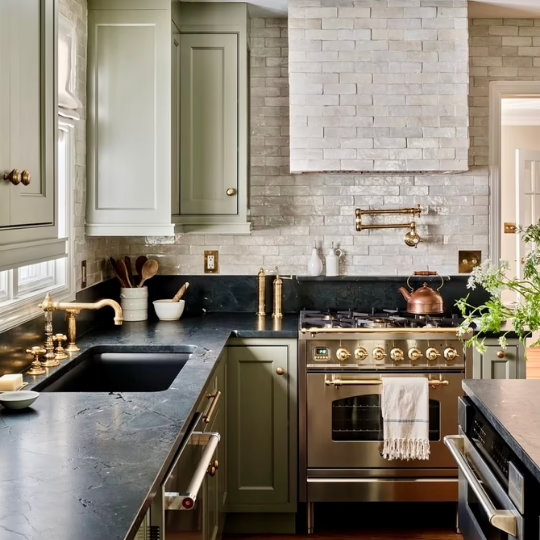
What drives kitchen remodeling costs in NJ
Kitchen size and footprint
Larger kitchens require more cabinetry, countertop material, flooring, and labor.
Cabinet quality and type
Stock cabinets cost significantly less than semi-custom or full custom cabinetry.
Countertop material
Quartz, soapstone, and granite cost more but last significantly longer than cheaper alternatives.
Structural changes
Removing walls, relocating plumbing, or adding electrical circuits adds meaningful cost.
Permitting and inspections
Required for most NJ kitchen remodels involving structural, electrical, or plumbing work.
Existing conditions
Older NJ homes may have conditions requiring attention before remodeling begins.
Get Our Free How to Choose A Remodeling Contractor Guide
Before you hire a remodeling contractor, download our free guide to learn the questions every homeowner should ask. Be cautious of contractors who provide ballpark estimates over the phone without visiting your home.
An accurate kitchen remodeling proposal requires seeing the existing kitchen, assessing structural and mechanical conditions, and understanding your specific goals. Contractors who skip this step are more likely to surprise you with costly change orders once work begins.
How long does a kitchen remodel take in New Jersey?
Kitchen remodeling timelines depend on the scope of the project, the complexity of the design, and how quickly permits are approved through the local township building department.
Typical kitchen remodeling timeline phases
Design and planning (2 to 4 weeks)
Initial consultation, layout development, 3D rendering, material selections, and proposal preparation.
Permitting (2 to 6 weeks)
Permit application submission and approval through the local township building department. Timeline varies by municipality and project complexity.
Demolition and rough work (1 to 2 weeks)
Removal of existing kitchen, structural modifications, plumbing and electrical rough-in, and inspections.
Cabinet and countertop installation (1 to 3 weeks)
Cabinet delivery and installation, countertop templating, fabrication, and installation.
Finishes and completion (1 to 3 weeks)
Backsplash tile, flooring, fixtures, appliances, trim, painting, and punch list completion.
Do you need permits for a kitchen remodel in New Jersey?
Most kitchen remodeling projects in New Jersey that involve structural changes, electrical upgrades, or plumbing modifications require permits from the local township or borough building department.
Work that typically requires permits in NJ
Removing or altering load-bearing walls. Adding or relocating electrical circuits or outlets. Moving or adding plumbing lines. Installing or relocating a gas line or gas appliance. Upgrading the electrical panel to support new appliances.
Work that typically does not require permits in NJ
Cabinet refacing or replacement without layout changes. Countertop replacement in the same location. Painting and cosmetic updates. Flooring replacement. Fixture swap like-for-like in the same location.
A licensed general contractor should handle all permit applications, plan submissions, and inspection scheduling on your behalf. If a contractor suggests pulling your own permits or skipping permitting entirely, that is a significant red flag.

How to plan your kitchen remodel
The planning phase is where most kitchen remodeling projects succeed or fail. Homeowners who invest time in planning before construction begins experience fewer surprises, make better decisions, and end up with kitchens they are happier with long term.
Start with how you actually use your kitchen
Before thinking about finishes or cabinet styles, observe how your household uses the kitchen today. Where do people congregate? What are the biggest functional frustrations? The best kitchen designs solve real problems specific to how your family lives, not just what looks good in a magazine.
Establish a realistic budget before design begins
Knowing your budget before you start designing prevents the disappointment of falling in love with a kitchen beyond what you want to spend. Share your budget honestly with your contractor at the first meeting. A good contractor will design to your budget rather than designing a dream kitchen and working backward.
Use 3D renderings to visualize before committing
One of the most valuable tools in the kitchen planning process is a 3D rendering of the proposed design. It allows you to see exactly how your finished kitchen will look and feel, including the cabinet heights, island proportions, and flow between each area, before construction begins.
Choosing cabinets, countertops, flooring, and backsplash
Material selections are where a kitchen remodel goes from a plan to a finished space. These decisions have a major impact on both the look of the kitchen and its long-term performance.
Cabinetry
Cabinetry typically represents the largest single cost in a kitchen remodel. The three main options are stock cabinets in standard sizes, semi-custom cabinets with a wider range of sizes and finishes, and fully custom cabinets built to your exact specifications. For most NJ homeowners doing a full remodel, semi-custom or custom cabinetry delivers the best combination of quality, fit, and design flexibility.
Countertops
Quartz is the most popular countertop material for NJ kitchen remodels due to its durability, consistent appearance, and low maintenance. Natural stone including granite and marble offers unique visual character but requires sealing and more careful maintenance. Quartzite offers the look of marble with better durability. The right choice depends on how heavily your kitchen is used and your maintenance tolerance.
Flooring
Kitchen flooring needs to handle moisture, foot traffic, dropped items, and daily cleaning. Hardwood and engineered hardwood connect the kitchen visually to adjacent living spaces. Large-format porcelain tile is highly durable. Luxury vinyl plank is increasingly popular for its water resistance, durability, and comfort underfoot.
Backsplash
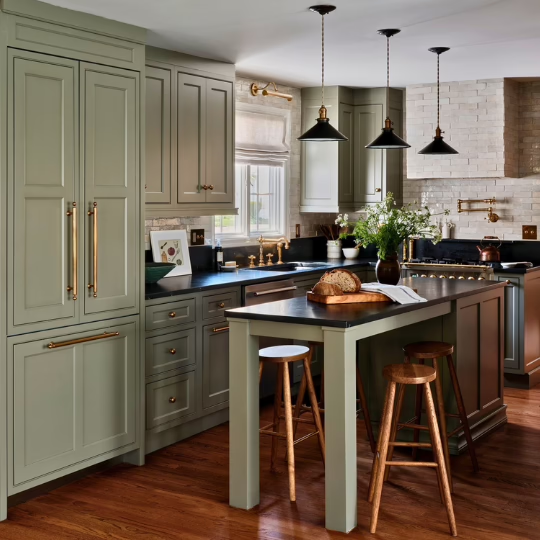
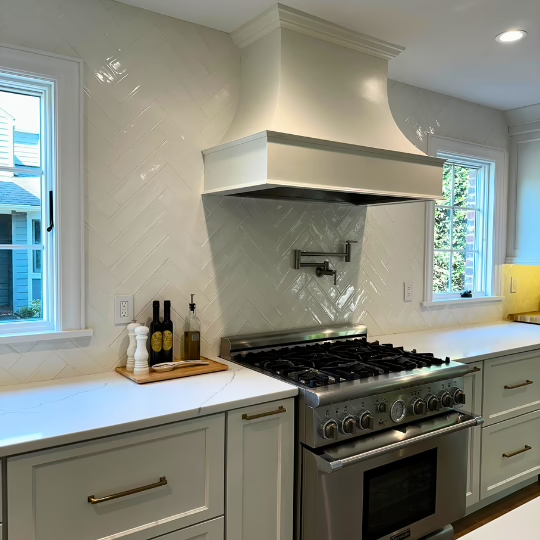
The backsplash is one of the most visible design elements in a kitchen and one of the most cost-effective opportunities to add personality. Subway tile remains a classic choice for its versatility. Large-format tile creates a cleaner, more contemporary look. Stone slab backsplashes matching the countertop material have become increasingly popular in NJ luxury kitchen remodels.

Open concept kitchen remodels - what is involved structurally
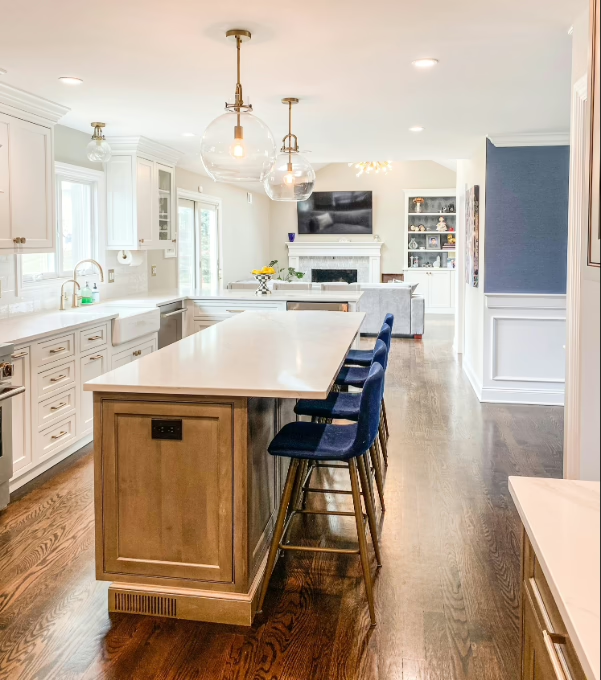
Opening a closed kitchen to connect it to the dining room or living space is one of the most transformative and most requested kitchen remodeling projects in New Jersey. It changes not just the kitchen itself but how the entire main floor of the home feels and functions.
Identifying load-bearing walls
Before any wall can be removed, a structural assessment must determine whether the wall is load-bearing. Load-bearing walls cannot simply be removed. They require a properly engineered beam installed at the header level to transfer the load to the walls on either side. This structural work must be permitted and inspected through the local building department.
What open concept remodels typically involve
Structural engineer assessment of load-bearing conditions. Permit application and approval through the local building department. Temporary support structure during beam installation. Header beam installation and structural inspection. Relocation of electrical, plumbing, or HVAC within the removed wall. Patching, refinishing, and matching flooring across the newly opened space.
Open concept kitchen remodels are one of the most common and most impactful projects SEI Construction completes throughout Union County. Many of the Colonial, Cape Cod, and split-level homes in communities like Westfield, Scotch Plains, and Summit were built with closed-off kitchen layouts that no longer match how families cook, gather, and entertain today.
Kitchen remodeling in older NJ homes - Colonials, Cape Cods, and Tudors
New Jersey’s residential neighborhoods, particularly throughout Union, Essex, and Morris County, are dominated by older homes built between the 1920s and 1970s. Remodeling kitchens in these homes requires specific knowledge of how they were built and the conditions that are commonly encountered.
Colonials
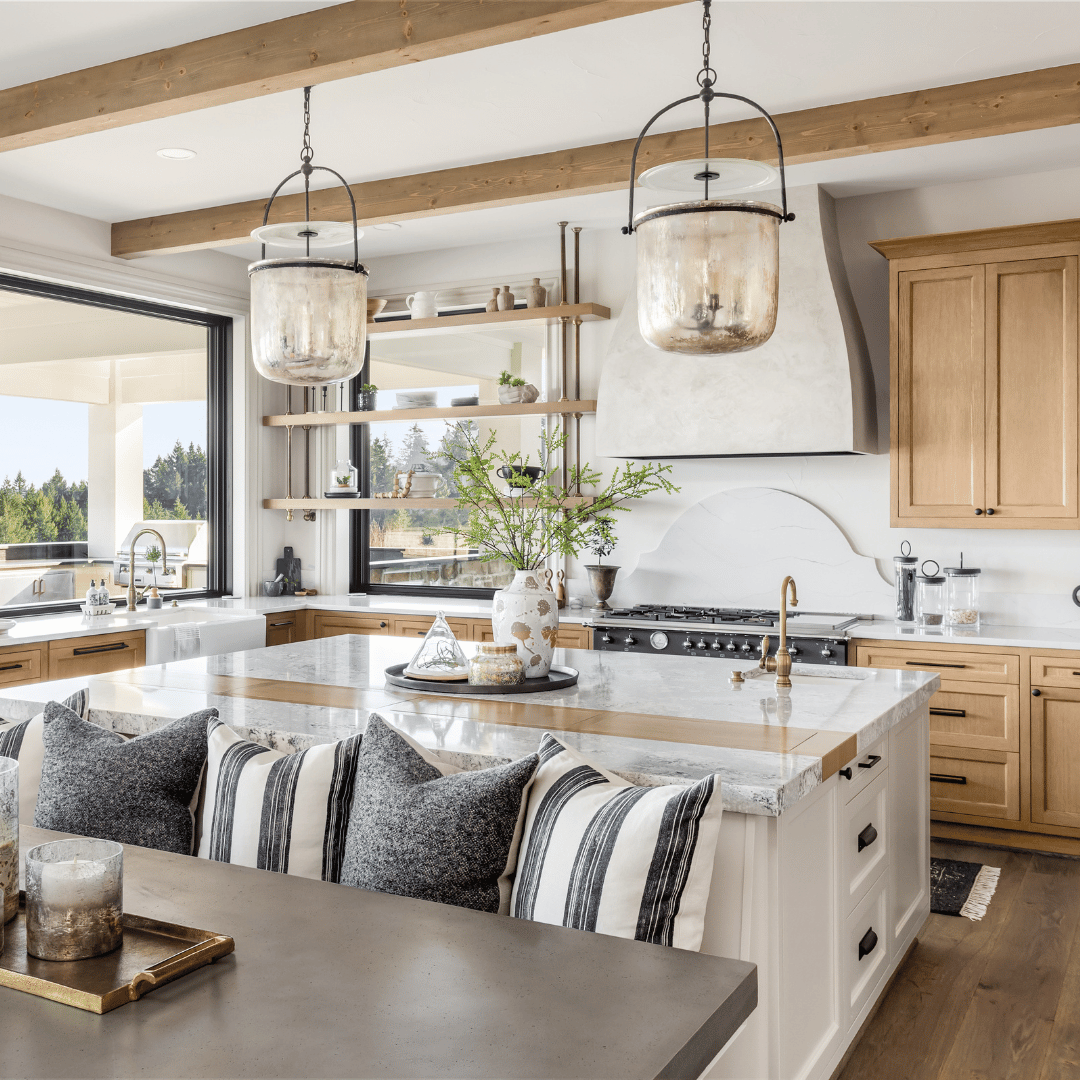
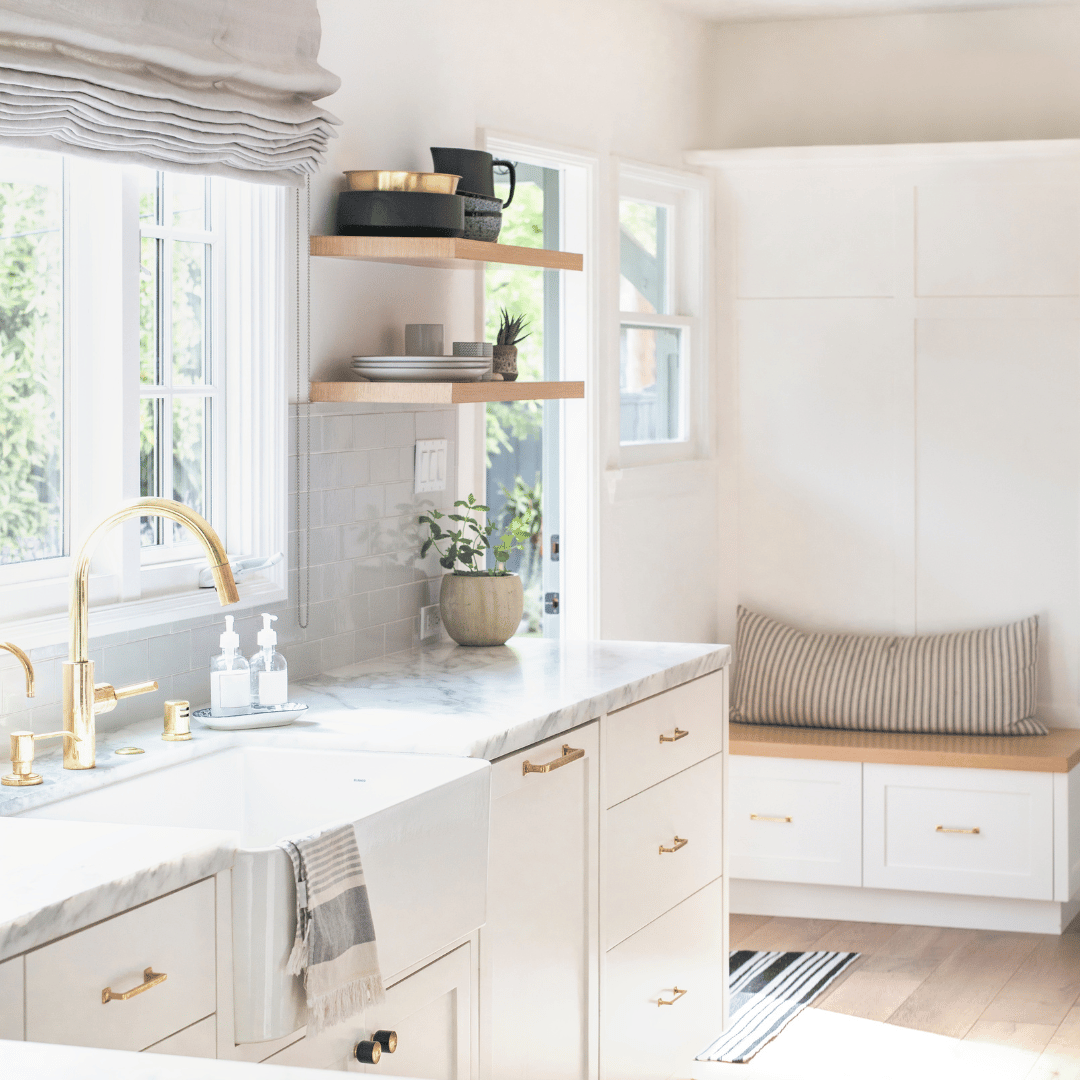
The most common home style in Union County. Original Colonial kitchens are typically galley or L-shaped layouts positioned at the back of the home. The most popular remodel for Colonial kitchens is opening the layout to connect with the dining room or family room, adding an island, and bringing in natural light through window additions or enlargements.
Cape Cods
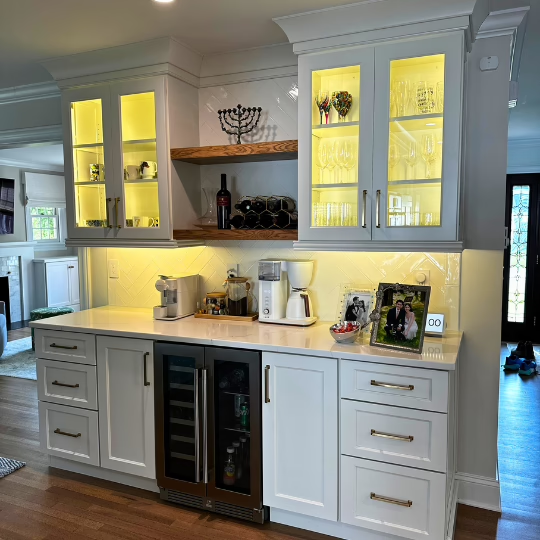
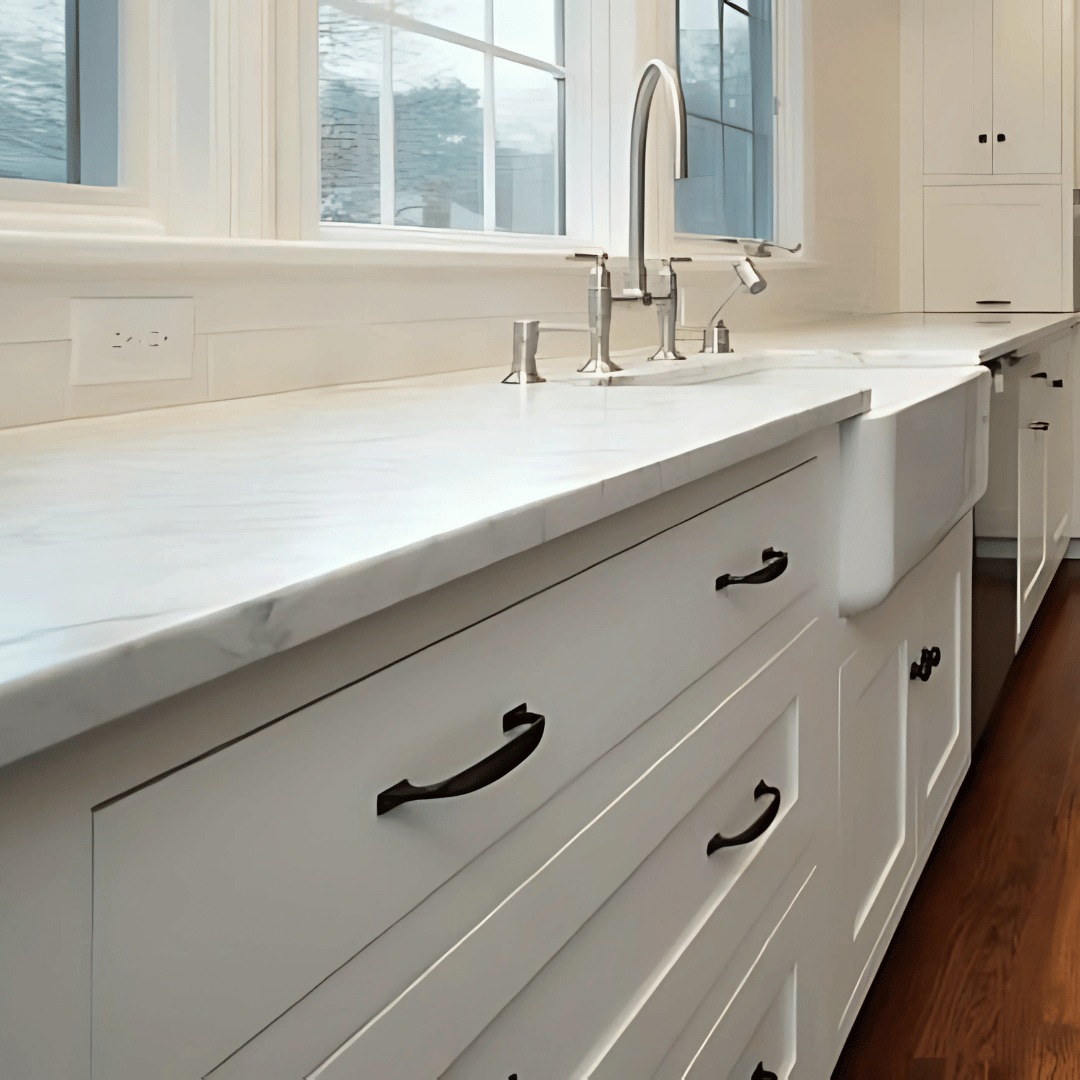
Cape Cod kitchens tend to be compact with lower ceiling heights. The challenge is maximizing functional square footage and bringing in light without major structural additions. Smart cabinet configuration, under-cabinet lighting, and strategic window additions can transform these kitchens dramatically without requiring an addition.
Tudors and historic homes
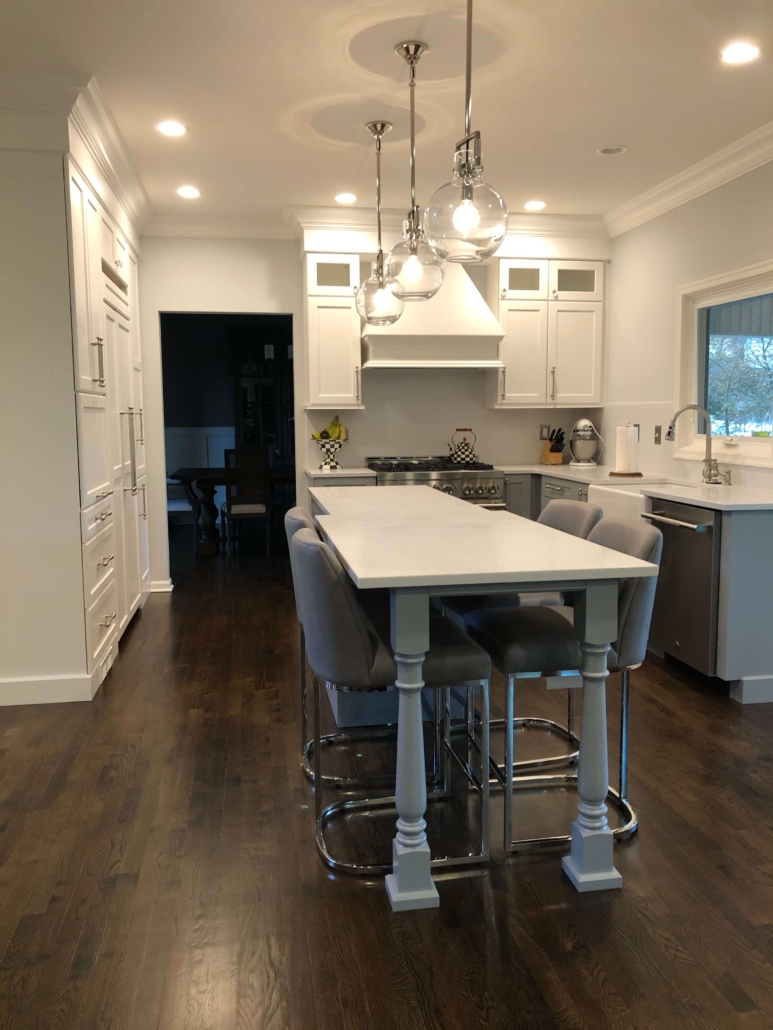
Tudor and Victorian homes require special sensitivity during kitchen remodeling. The goal is to modernize the kitchen’s function and performance while preserving the architectural details and period character that give these homes their value. This may involve matching original millwork, preserving arched openings, or working around original plaster walls and ceilings.
How to Choose a Kitchen Remodeling Contractor in NJ
Choosing the right contractor is one of the most important decisions you’ll make during your kitchen remodel. To help homeowners avoid costly mistakes, we’ve created a free guide that walks you through the hiring process and explains what separates reputable contractors from those you should avoid.
What You'll Learn
- How to verify a New Jersey Home Improvement Contractor license
- What insurance every contractor should carry before work begins
- Which reviews and references actually matter
- Common red flags that could signal problems later
- The essential questions every homeowner should ask before hiring a kitchen remodeling contractor
- How to compare proposals and avoid costly surprises during construction
What to expect during your kitchen remodel
Understanding what a kitchen remodel looks and feels like from the inside helps homeowners prepare mentally and logistically. A well managed remodel is disruptive by nature, but the disruption should be predictable, contained, and communicated in advance.
The kitchen will be out of service
Plan for your kitchen to be non-functional for the majority of the active construction phase. Set up a temporary kitchen in another area of the home using a microwave, coffee maker, and mini-fridge. Most full remodels involve four to eight weeks without normal kitchen access depending on scope.
Dust and noise are part of the process
Demolition, saw work, and drywall finishing all generate dust and noise. A professional contractor will use dust barriers and containment systems to limit the spread throughout the home. SEI Construction uses the BuildClean professional dust control system on every project, removing up to 90% of airborne construction dust and allowing most homeowners to continue living in their homes comfortably throughout the remodel.
Communication should be consistent
You should hear from your project manager regularly throughout the build – not just when problems arise. Good contractors communicate proactively about schedule updates, decisions that need to be made, and progress milestones. If you are not hearing from your contractor and do not know where the project stands, that is a problem worth raising directly.
Kitchen remodeling near you in Central NJ
If you are a homeowner in Central New Jersey planning a kitchen remodel, the contractor you choose should have demonstrated experience working in your specific county, familiarity with the home styles common in your community, and direct relationships with your local township building department.
SEI Construction, Inc. has been completing kitchen remodeling and renovation projects throughout Union County, Essex County, and Morris County since 1987. We are based at 110 Myrtle Avenue in Westfield and serve homeowners in Westfield, Scotch Plains, Fanwood, Cranford, Summit, Short Hills, Chatham, New Providence, and surrounding communities.
Our kitchen remodeling and renovation services cover every scope from cosmetic updates to full layout reconfigurations and luxury kitchen builds. Every project begins with a free in-home consultation, a detailed 3D design, and a written proposal before anything is signed.
Discover a Unique Browsing Experience for your Township:
Ready to Get a Free Kitchen Remodel Quote
SEI Construction, Inc. offers free in-home consultations for homeowners throughout Union, Essex, and Morris County. No pressure and no obligation.

Mike Rizzo
A small river named Duden flows by their place and supplies it with the necessary regelialia. It is a paradisematic country, in which roasted parts of sentences fly into your mouth. Even the all-powerful Pointing has no control about the blind texts it is an almost orthographic life
One day however a small line of blind text by the name of Lorem Ipsum decided to leave for the far World of Grammar. The Big Oxmox advised her not to do so, because
- Phone:+1 (859) 254-6589
- Email:[email protected]

About the Author
Mike Rizzo, Owner of SEI Construction Inc.
Meet Mike Rizzo, the driving force behind SEI Construction Inc., a remodeling and renovation company rooted in Westfield, NJ since 1987. With over three decades of industry prowess, SEI Construction is celebrated for its commitment to top-notch craftsmanship and meticulous attention to detail. Under Mike's leadership, the company specializes in historic restorations, home additions, and kitchen, bathroom, interior, and exterior projects. Mike's outstanding contributions have earned him a spot in Remodeling Inc's prestigious top 500 remodeling companies. Notably, his projects have graced A Tour of Notable Homes, showcasing SEI Construction's dedication to quality and preserving architectural history. Since day one, the company has consistently delivered exceptional results, embodying Mike's passion for transforming spaces with precision and excellence.